Choosing Norweco Singulair Green for Long-Term Wastewater Reliability
@felixnlmm479
October 28, 2026 · 14 min read
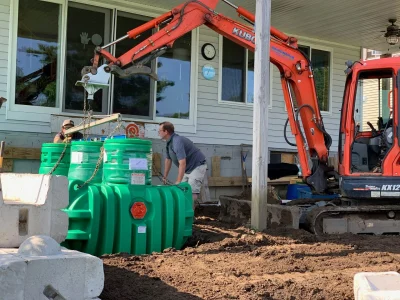
When people shop for onsite wastewater equipment, they often focus on the wrong moment in the life of the system. They think about installation day, permit approval, or the first time the yard gets restored and looks tidy again. Those moments matter, but they are brief. The real test starts later, after five winters, after a week of holiday guests, after a power interruption, after a pump-out gets delayed, after the property changes hands and the new owner has no idea what is buried behind the house.
That is why long-term reliability deserves more weight than almost any sales feature. A treatment unit can look efficient on paper and still become a nuisance if it is sensitive, hard to service, or unforgiving of ordinary household behavior. In that context, the norweco singulair green often comes up for a simple reason: people want a residential treatment system that can keep performing year after year without constant drama.
I have seen that question from several angles, including rural homeowners replacing a failed conventional system, builders trying to satisfy a difficult site plan, and property managers who need something predictable enough to budget around. The right answer depends on soils, loading patterns, local regulations, and service support in the area. Still, the reasons people land on a Singulair Green tend to follow a recognizable pattern. They are usually trying to solve a reliability problem before it starts.
Reliability starts with what the site is asking for
No treatment unit is reliable in the abstract. It is reliable only when it is matched correctly to site conditions and expected use. That point gets lost because many buyers understandably compare systems by brochure language rather than by constraints on the ground.
A small lot with tight setbacks creates one kind of challenge. A lake property with strict nutrient expectations creates another. A home that sits vacant for stretches and then fills up on summer weekends behaves very differently from a year-round household with steady daily flow. Clay soils, high groundwater, shallow bedrock, or a need to reduce organic load before dispersal can all push a project away from a basic septic tank and trench arrangement.
In those settings, an advanced treatment unit is not a luxury. It is often the practical route to getting a permit and protecting the dispersal field over time. The attraction of the norweco singulair green is that it is generally considered in situations where owners need more treatment than a conventional tank norweco singulair green provides, norweco singulair green but still want something rooted in established residential use rather than experimental hardware.
That distinction matters. Wastewater reliability is rarely about finding the most sophisticated machine. It is about finding a system with enough treatment capability for the site, enough durability for the household, and enough local service familiarity that routine maintenance does not become a scavenger hunt.
What homeowners usually mean when they say “reliable”
Most people do not mean laboratory performance. They mean four simpler things.
First, they want effluent quality that supports the downstream part of the system, especially the soil treatment area or drip dispersal field. Cleaner effluent generally gives the receiving area a better chance of lasting.
Second, they want stable operation despite the messiness of real household life. Laundry gets stacked into one day. Guests arrive. Teenagers take long showers. Somebody puts the wrong thing down the drain. A system does not need to be indestructible, but it does need some tolerance.
Third, they want service to be straightforward. If the alarm goes off, if a component needs replacement, if routine inspection is due, there should be a clear path to getting it handled.
Fourth, they want costs to be predictable. A higher initial price can be justified if it prevents a drainfield failure or repeated emergency work. Unpredictable repairs are what sour owners on advanced systems.
Those priorities are more practical than glamorous, and they are exactly the lens through which a system like Singulair Green should be judged.
Why the Singulair Green gets serious consideration
The broad appeal of the Norweco platform has less to do with a flashy feature set and more to do with a familiar treatment approach. Aerobic treatment systems are not new. Their basic value is well understood: by introducing oxygen into the treatment process, they support aerobic biological activity that can break down wastewater more thoroughly than passive settling alone. That can produce higher-quality effluent when the system is designed, installed, and maintained properly.
For a property where the receiving environment is less forgiving, that added treatment can be meaningful. Better-treated effluent can reduce stress on downstream components. On difficult sites, that margin matters.
The Singulair Green also tends to appeal to buyers who want a single integrated treatment package rather than piecing together a custom arrangement from mixed components. There is peace of mind in a standardized residential product line. Installers know what they are putting in. Service providers know where to look when something is off. Regulators have often seen the technology before. That familiarity is not a small advantage. Systems fail in the field not only because of engineering issues, but because too few people understand them once the excavation is backfilled.
I have seen homeowners hesitate at the idea of any mechanical treatment unit because they assume “mechanical” means fragile. Sometimes the opposite is true. A well-supported mechanical system with a clear service path can be a better long-term bet than a passive layout forced onto a poor site, only to struggle for years before showing obvious symptoms.
The hidden cost of under-treating wastewater
A conventional septic system can perform well when the site supports it and the design is appropriate. There is no virtue in overcomplicating a property that does not need advanced treatment. But when the site is marginal, under-treatment often looks cheaper only at the front end.
The classic example is a lot with limited dispersal options. If the incoming effluent is carrying more suspended solids and organic load into a stressed drainfield than that field can comfortably handle, the downstream area pays the price. Failure may not happen immediately. Instead, performance gradually degrades. Wet spots begin appearing in a seasonally damp corner. Odors show up after heavy use. A once-tolerant field becomes touchy.
At that point, the owner is not comparing a modest septic tank cost to a treatment unit cost anymore. They are comparing the price of earlier treatment to the price of reconstruction, site disruption, permitting, and in some cases a complete redesign.
That is where the economics of the norweco singulair green become easier to understand. It is usually not selected because it is the cheapest line item. It is selected because it can reduce downstream risk on sites where the cheap option may not stay cheap.
Long-term reliability depends on more than the tank
One of the most common mistakes in wastewater planning is giving all the credit, or all the blame, to the treatment unit itself. In practice, long service life comes from the whole chain working together. The pretreatment stage, aeration, clarification, pumping if required, controls, alarms, disinfection if required by local code, and final dispersal all affect the outcome.
A high-quality treatment unit installed on a bad elevation profile or connected to an undersized dispersal area can still disappoint. On the other hand, a well-matched treatment train with realistic loading assumptions often performs quietly for years.
When evaluating Singulair Green, I would pay close attention to how the installer and designer discuss the complete system. If the conversation focuses only on the tank and never on reserve area, hydraulic loading, service access, power supply, or homeowner use patterns, that is a warning sign. Reliable wastewater systems are rarely the product of casual design.
The best projects I have seen involve a contractor who asks plain but useful questions. How many bedrooms, not how many people live there today. Is there a garbage disposal. Will the home be seasonal. Is there a basement bath that may get more use later. Are roof drains or sump lines mistakenly tied into the sewer line. Those questions are not paperwork. They are the difference between a stable system and a stressed one.
Maintenance is not a flaw, it is part of the bargain
Some buyers hear “service contract” or “routine inspection” and immediately assume the system is high-maintenance. I think that reaction needs context. Every onsite wastewater system needs maintenance. Conventional systems just hide neglect better for a while.
Aerobic treatment units, including systems in this category, ask for regular attention because they are doing more treatment in a smaller, more active environment. That is not a defect. It is the price of higher performance. The fair question is whether the maintenance is manageable and whether it provides value.
In many cases, the answer is yes, provided the owner understands the responsibility from day one. Routine service often catches issues early, before a clogged filter, worn aerator component, float problem, or sludge accumulation turns into a larger repair. Over ten or fifteen years, preventive attention is usually cheaper than deferred troubleshooting.
There is also a psychological benefit that should not be overlooked. Owners with a scheduled service relationship are less likely to ignore subtle warning signs. They know who to call. Their records are easier to track. If they sell the property, they have a cleaner maintenance history to hand off.
What to ask before you commit
The smartest purchases happen when the owner interviews the system as much as the contractor. A few questions reveal whether the proposed installation is likely to remain dependable:
- How often will this specific system need routine service under local rules and typical household use?
- Who provides service in this area, and how quickly can they respond if there is an alarm?
- What homeowner habits are most likely to shorten performance life?
- How does this system handle variable occupancy, such as seasonal use or guest surges?
- What parts are considered normal wear items over the first ten years?
Those answers matter more than a polished brochure. I would rather hear a candid explanation of service intervals and expected upkeep than vague assurances that the system is “low maintenance.”
Real-world fit matters more than theoretical peak performance
One reason advanced treatment systems sometimes get unfairly judged is that people compare them based on ideal conditions. Real homes rarely provide ideal conditions. Flows come in bursts. Cleaning products vary. Power quality is not always perfect. Some owners are conscientious, some are chaotic, and many are somewhere in between.
A reliable system is one that performs reasonably well in that imperfect environment.
For example, a family home with two adults, three children, and frequent weekend laundry loads creates a different operating rhythm than a retirement home occupied by one couple. A lake cabin may sit quiet for days and then see full occupancy. A rental property may have no consistent user behavior at all. These are not small details. They shape how forgiving the treatment process needs to be.
The norweco singulair green is often evaluated favorably where an owner wants a known residential aerobic treatment option rather than a custom one-off design that only one technician in the county understands. Familiarity creates resilience. If a component needs attention, there is less guesswork. If the property changes hands, the system is easier to explain and maintain.
That familiarity should still be local, not just national. A good product without nearby support is a weaker choice than a good product with strong local backing.
Installation quality can make or break the outcome
I have seen excellent equipment handicapped by poor installation. Sometimes it is obvious, such as improper elevations or inaccessible risers. Sometimes it is more subtle, such as weak electrical work, careless backfill, or failure to protect the unit from runoff. The owner often does not discover the consequences until months later.
With any advanced treatment unit, insist on clean workmanship and usable access. Risers should make routine inspection straightforward. Components that need service should not be buried in a way that turns every visit into an excavation exercise. Alarm locations should make sense to the homeowner. Control panels should be mounted where they are protected but accessible. If pumping is part of the design, the discharge and floats deserve the same attention as the treatment vessel itself.
A strong installer will also spend time on owner handoff. That means explaining what not to flush, what the alarm means, when service is due, and how the system fits into the property. Owners remember only a fraction of verbal instructions, so written guidance helps. A quality system deserves a quality handover.
Where the trade-offs become real
No serious assessment should pretend there are no downsides. The Singulair Green category of system comes with obligations. There is electrical dependence. There are service intervals. There are mechanical components that eventually wear. Initial cost is commonly higher than a basic gravity septic setup when the latter is feasible.
That does not make it a poor choice. It means the decision should be based on life-cycle thinking, not purchase price alone.
If a property could support a conventional system comfortably and legally, with enough room, appropriate soils, and strong long-term prospects, the simpler route may still be the better route. Simplicity has value. But if the site is constrained, environmentally sensitive, or prone to overloading a conventional design, then paying for higher treatment up front may be the more conservative choice in the best sense of the word.
A homeowner once described this to me more clearly than many technical documents do. He said he was not buying a tank, he was buying fewer bad surprises. That is the right frame. Long-term wastewater reliability is mostly about reducing surprises.
Practical habits that help any advanced treatment system last
No advanced unit can compensate for reckless use forever. The day-to-day habits inside the house still matter, often more than owners expect. The good news is that the most helpful habits are not complicated.
First, spread water use when you can. Back-to-back laundry marathons are harder on onsite systems than the same total volume spaced over time.
Second, keep wipes, grease, and harsh non-biodegradable materials out of the system. “Flushable” on a package is not the same thing as safe for treatment equipment.
Third, stay on top of routine pumping and service. Solids management is foundational, not optional.
Fourth, know what your alarm means before it activates. Panic causes bad decisions. Familiarity leads to faster, calmer responses.
Those habits sound ordinary because they are. Reliability is often built from ordinary discipline rather than heroic intervention.
Thinking in decades, not seasons
It is easy to undervalue wastewater infrastructure because most of it is hidden. You do not admire it the way you admire a new roofline or kitchen finish. Yet few residential systems create more stress when they fail. A compromised onsite system affects health, property use, resale confidence, landscaping, and often the owner’s relationship with the local health department.
That is why I like to evaluate systems such as the norweco singulair green over a ten to twenty year horizon. Over that span, the important questions become clearer. Will the system still be serviceable when the original installer retires? Will parts and support remain straightforward to obtain? Will the treatment level continue to protect the downstream field? Will the next owner understand what they have inherited?
Those are not abstract concerns. They are the difference between a property asset and a recurring headache.
A treatment unit earns its reputation slowly. Not in the first month, when everything is new, but in the seventh year, when ordinary wear has begun and the owner has settled into routine life. Systems that remain understandable, maintainable, and predictable through that phase are the ones worth respecting.
For buyers weighing options carefully, that is the strongest case for choosing a system in this class. Not novelty, not jargon, not the illusion of a maintenance-free future. Just the practical goal of dependable wastewater treatment on the kind of site where dependability has to be engineered, supported, and lived with over time.
Excavating New Jersey LLC
406 County Rd 565, Wantage, NJ 07461, United States
+1 973-791-4284
FAQ About norweco singulair green
How much does a NORWECO septic system cost?
The installed cost depends on the selected unit, engineering, site access, excavation, electrical work, disposal-field design and required approvals. A tank-only price is not a complete installation quote. Ask Excavating New Jersey LLC for a site-specific, itemized estimate that also explains ongoing service costs.
How does a Norweco septic system work?
The Singulair Green uses pretreatment, aeration, clarification and filtration to treat domestic wastewater. In the aeration chamber, oxygen supports bacteria that break down organic material. The Bio-Kinetic unit provides further filtration and flow equalization. Final effluent disposal must follow the property's approved design and applicable requirements.
What is the average lifespan of a septic system?
There is no guaranteed lifespan for every system. Design, installation, soil conditions, wastewater loading and regular maintenance all matter, and mechanical parts may need replacement before the tank. For a Singulair Green system, follow the manufacturer's service schedule and have a qualified provider assess its condition and pumping needs.